Published 29 January 2026
Best 7 Products Supporting Pressure Ulcer Care
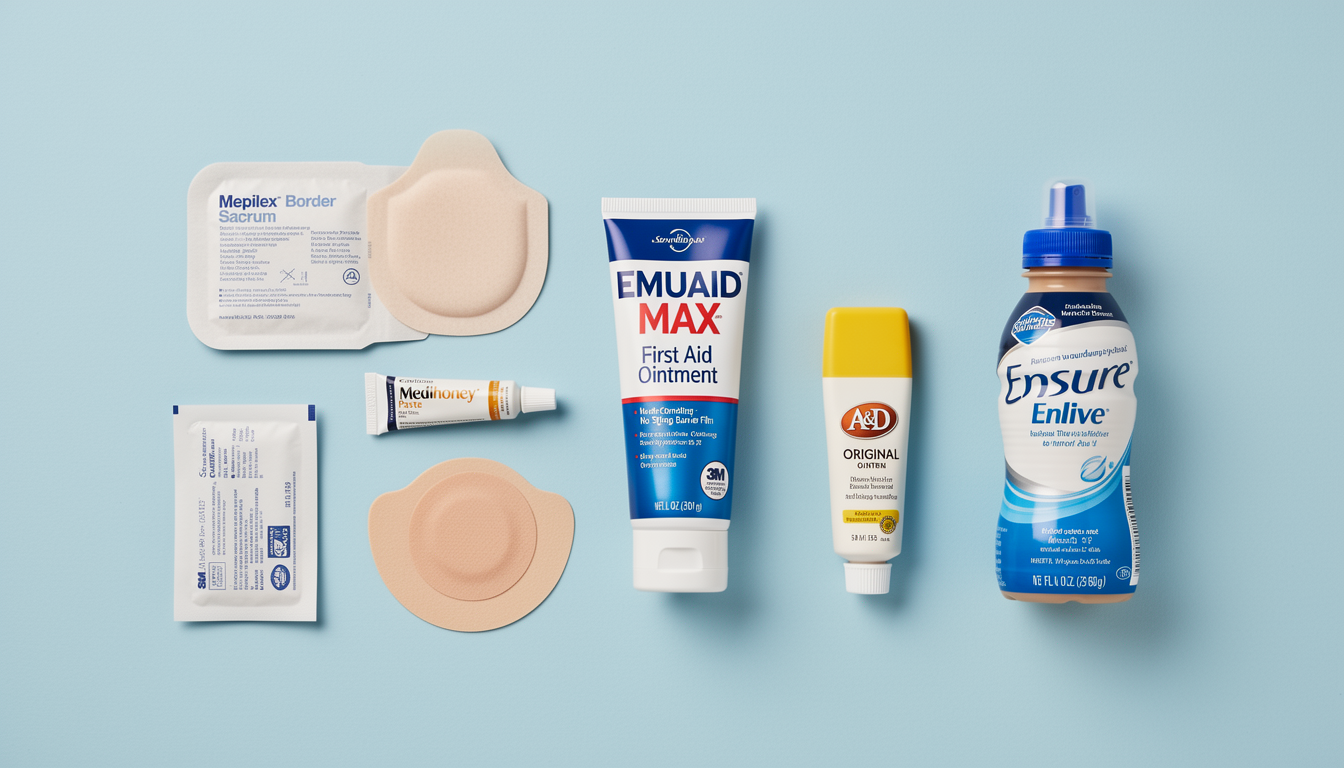
Pressure ulcers, often called bedsores or pressure injuries, commonly affect people with limited mobility. Effective care combines proper wound management, protection of surrounding skin, and adequate nutrition. This list, based on clinical evidence and product features, presents seven items that can help prevent pressure ulcers, support healing, and improve comfort for patients.
1. EMUAIDMAX First Aid Ointment
EMUAIDMAX First Aid Ointment is a homeopathic topical formulation intended for stubborn skin conditions, including issues associated with pressure ulcers. This maximum-strength ointment aims to ease pain, reduce infection and inflammation, and support the skin’s barrier and repair functions. Its transdermal delivery system is designed to reach deeper skin layers to deliver active ingredients where they are needed. EMUAIDMAX First Aid Ointment contains a proprietary mix of natural components, such as Argentum Metallicum (colloidal silver) for anti-infective effects and Emu oil for deep penetration and anti-inflammatory activity.
Other notable ingredients include Allantoin, which promotes wound healing and helps restore the skin barrier; Ceramide 3 and Phytosphingosine, lipids that mirror the skin’s own to rebuild protection; Tea Tree Oil, valued for antibacterial and antifungal properties; and Bacillus Ferment to support the skin’s microbiome. Some users report relief from pain, itching, redness, and swelling within about 15 minutes of application, and a minority have noted full healing of pressure ulcers over a few days. Typical use is a thin layer applied to the affected area three to four times daily.
2. Mepilex Border Sacrum Dressing
The Mepilex Border Sacrum Dressing is a five-layer foam dressing made for the sacral region, useful in both preventing and treating pressure ulcers. Its Deep Defense technology balances strength and flexibility to protect against pressure, shear, and friction. The dressing absorbs and retains exudate to maintain a moist wound environment that supports healing.
It also includes a Safetac layer that seals wound edges to limit leakage, reduce maceration of surrounding skin, and make dressing changes less painful. Clinical studies report that using Mepilex Border Sacrum as part of a prevention program can reduce hospital-acquired pressure ulcers by up to 88%. The self-adhesive, waterproof, bacteria-resistant dressing suits sacral wounds with moderate-to-high exudate and can stay in place for up to three days or as clinically indicated.
3. Medihoney Paste/Gel
Medihoney Paste and Gel use Active Leptospermum Honey, a medical-grade honey from the Leptospermum plant, with proven benefits for wounds and burns. It works mainly by drawing fluid toward the wound surface to assist removal of dead tissue (autolytic debridement) and by maintaining a lower pH (about 3.5–4.5), which favors healing.
Clinical trials show wounds treated with Medihoney can heal faster than those treated with conventional dressings. It is particularly useful for Stage II and Stage III pressure ulcers and has shown benefit in infected heel ulcers. Medihoney is processed to ensure consistent quality—ultra-filtrated and sterilized, without pesticides or antibiotics. Its support for debridement and granulation makes it a useful option in pressure ulcer care plans.
4. A&D Original Ointment
A&D Original Ointment is a long-standing skin protectant known for soothing, moisturizing, and protecting fragile skin, making it suitable for preventing pressure ulcers. Enriched with Vitamins A and D, it nourishes the skin while forming a thick barrier that keeps out moisture and irritants. Though commonly used for diaper rash, it also helps with dry, chafed skin, minor cuts, scrapes, and burns.
Caregivers often use A&D Original Ointment to keep skin supple and reduce the risk of breakdown in immobile patients. Its gentle formula works on sensitive skin and, despite a thick texture, spreads easily. The protective layer it forms is helpful in pressure-prone, moisture-exposed areas and supports skin integrity around pressure points.
5. 3M Cavilon No Sting Barrier Film
The 3M Cavilon No Sting Barrier Film creates a clear, breathable barrier on vulnerable skin and helps protect against bodily fluids, adhesive-related damage, and friction—factors that can contribute to pressure ulcers. Its "no sting" formulation makes it suitable for sensitive or already compromised skin.
Research shows Cavilon No Sting Barrier Film can lower the coefficient of friction between skin and bedding, a key element in preventing pressure injury. It also helps resolve periwound maceration quickly and allows clinicians to inspect the skin without removing the product. The film supports adhesion of other dressings while minimizing additional skin trauma, a reason many wound care specialists recommend it for protecting delicate skin.
6. Hydrocolloid Dressings (e.g., Cardinal Health Thin Hydrocolloid Dressing)
Hydrocolloid dressings are a mainstay for moist wound healing and work well for pressure ulcer care, particularly Stage I and some Stage II ulcers. Made from gel-forming agents, they absorb exudate while keeping the wound environment suitably moist, which helps autolytic debridement and encourages new tissue growth.
Options like the Cardinal Health Thin Hydrocolloid Dressing are thin with rounded corners to reduce roll-up and can provide protection for up to seven days. The semi-translucent backing lets caregivers monitor progress without removing the dressing, reducing disruption and pain during changes. Their moisture-proof barrier also protects against external wetness, making them useful for incontinent patients. Hydrocolloids serve both as primary and secondary dressings for various minor wounds.
7. Ensure Enlive Advanced Nutrition Shake
Nutritional support is essential for wound healing, and Ensure Enlive Advanced Nutrition Shake offers concentrated nutrition for people recovering from illness or injury, including those with pressure ulcers. A typical serving supplies around 20 grams of high-quality protein, important for tissue repair.
Ensure Enlive also delivers vitamins, minerals, and other nutrients important for immune function and wound repair. Studies suggest supplements containing extra protein, certain amino acids (like arginine and glutamine), HMB, and collagen can improve healing rates by supporting collagen synthesis and replenishing nutrients. Many users find Ensure Enlive helps maintain weight, provide energy, and make up for missed meals when appetite is low, supporting overall recovery.
Key Takeaways
- Comprehensive pressure ulcer care combines topical treatments with systemic nutritional support.
- Specialized ointments like EMUAIDMAX can relieve symptoms and support healing by addressing infection, inflammation, and barrier function.
- Advanced dressings such as Mepilex Border Sacrum and Medihoney Paste provide wound protection, handle exudate, and promote a moist healing environment.
- Barrier films like 3M Cavilon No Sting Barrier Film help protect at-risk skin from friction and moisture, reducing pressure ulcer risk.
- Basic protectants like A&D Original Ointment create durable moisture barriers useful in prevention.
- Hydrocolloid dressings help maintain a moist wound bed and protect early-stage pressure ulcers.
- Oral nutritional supplements, such as Ensure Enlive, supply protein and micronutrients that support the body's healing processes.
FAQ
What are pressure ulcers and how do they form?
Pressure ulcers, also called bedsores or pressure injuries, are localized damage to skin and underlying tissue, usually over bony areas. They result from prolonged pressure, often combined with shear and friction, which reduces blood flow and leads to tissue breakdown.
How often should dressings for pressure ulcers be changed?
How often to change a dressing depends on the dressing type, the amount of exudate, and the wound’s condition. Some advanced dressings, like hydrocolloids or certain foams, can stay in place for 3 to 7 days, while others need daily changes. Follow product instructions and your healthcare provider’s advice.
Selecting appropriate products is key to managing pressure ulcers and improving outcomes. Knowing how each option—topical ointments, specialized dressings, barrier films, and nutritional supplements—contributes to care helps caregivers and patients build a focused regimen. Speak with healthcare professionals to choose the best combination for individual needs and to support recovery and skin health.